
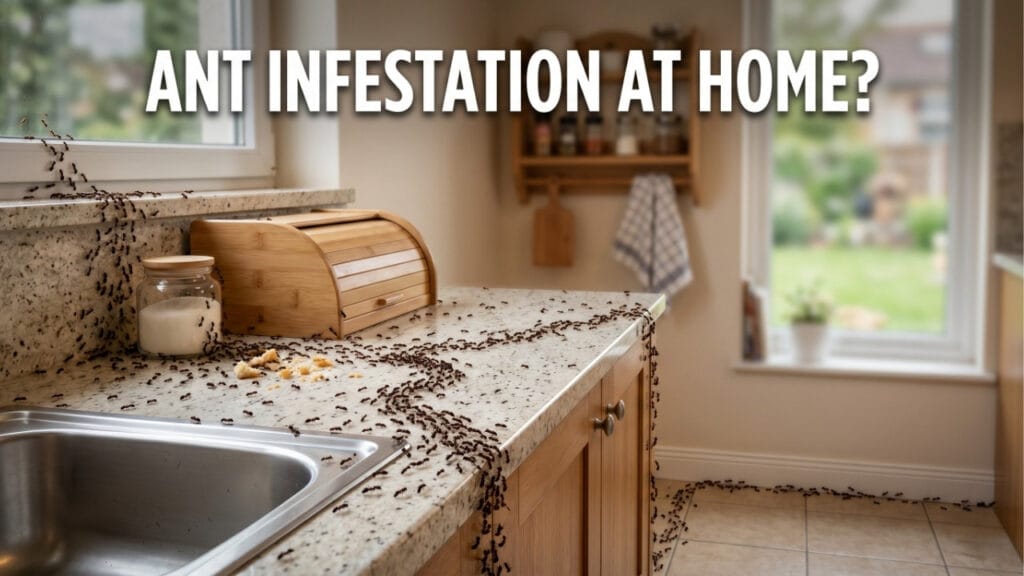
If you have noticed ants crawling through your kitchen, yard, or walls, the question of can ant bites cause swelling is worth taking seriously. Most people brush off ant bites as a minor irritation, but depending on the ant species and your body’s reaction, the effects can go well beyond a small red mark.
Yes, ant bites and stings can cause swelling. A typical reaction includes redness, localized swelling, itching, and a burning sensation around the bite area. For fire ants specifically, the sting often produces a fluid-filled blister or pustule that can take days to heal. People searching ant bite symptoms, how long does ant bite swelling last, or ant sting swelling treatment are usually dealing with this kind of reaction and want to know whether it is normal or something more serious.
In more sensitive individuals, ant bites can trigger a stronger allergic reaction. Signs of a severe response include rapid swelling spreading beyond the bite area, hives, difficulty breathing, or dizziness. This type of ant bite allergic reaction requires immediate medical attention and is a sign that the problem is not just a pest nuisance but a genuine health concern.
For homeowners across New Jersey, ant activity tends to peak during warmer months when colonies expand and forage aggressively. In densely populated areas like Newark, Elizabeth, and Paterson, pavement ants commonly nest in sidewalk cracks, building foundations, and damp basement walls. In suburban towns like Edison, Old Bridge, and Brick, carpenter ants often target wood structures while fire ant activity can be found in outdoor areas, mulch beds, and landscaped yards. In wealthier residential zones like Montclair, Summit, and Princeton, larger properties with mature landscaping can harbor well-established colonies that go unnoticed until someone gets stung.
Beyond the physical reaction, are ant bites dangerous in a broader sense? They can be, especially in homes with young children, elderly residents, or anyone with known insect allergies. Even without a severe allergic response, repeated exposure to an active ant infestation increases the risk of multiple stings and ongoing health discomfort.
An infestation also signals a deeper problem. A few visible ants typically means a much larger colony is operating nearby, inside walls, under floors, or in outdoor nesting areas close to the home. Common signs to watch for include ant trails near food sources, small dirt mounds near the foundation, hollow sounds in wood, and visible nesting debris in closets or crawl spaces.
Treating ant bites at home is a short-term fix. The only lasting solution is eliminating the colony and sealing entry points before the infestation grows or spreads to neighboring areas.
If ants have taken over your home or yard, contact New Day Pest Control for a thorough inspection and professional ant control treatment. We serve homeowners across New Jersey with targeted solutions that stop ant activity at the source.