
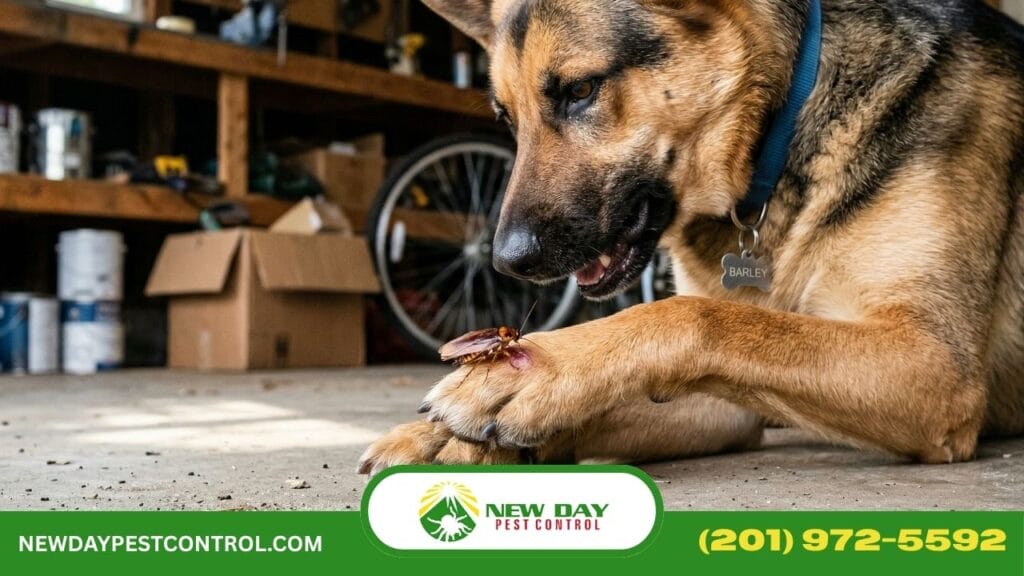
If you share your home with a dog and have spotted cockroaches in your Newark, Hackensack, or Paramus home, you are probably wondering: are cockroach baits safe for dogs? The short answer is that most modern cockroach baits pose a low risk to dogs, but there are important things every New Jersey pet owner should understand before using them.
How Cockroach Baits Work
Cockroach baits combine a food attractant with a slow-acting insecticide. The roach consumes the bait, returns to its colony, and spreads the poison before dying. Common active ingredients include fipronil, hydramethylnon, and indoxacarb. These substances are formulated in very small quantities and are designed to target insect biology, not mammal biology.
Are They Dangerous to Dogs?
Most cockroach baits are labeled as low-toxicity to mammals, including dogs. Active ingredients like fipronil are actually used in flea and tick treatments for dogs, which tells you a lot about their safety profile at low doses. A dog that nibbles on a bait station will likely experience, at worst, mild stomach upset. However, eating a large quantity, such as an entire tube of gel bait, could cause more serious gastrointestinal issues.
The real concern is not the insecticide itself but the attractive food ingredients, like sugar, that draw both roaches and curious dogs toward the bait. Keeping bait stations in hidden, hard-to-reach spots reduces the chance your dog ever encounters them.
Chemicals to Watch Out For
Not all roach control products carry the same risk level. Some ingredients are safer than others around dogs:
- Fipronil and hydramethylnon: Considered broadly safe for dogs at the concentrations found in consumer bait products
- Indoxacarb (found in gel baits like Advion): Safe in small amounts, but avoid letting dogs eat large quantities
- Boric acid: Moderately toxic if ingested in large amounts; can cause vomiting, fever, or in severe cases, seizures
- Pyrethrins, organophosphates, and carbamates: These chemicals found in sprays carry higher toxicity risks for pets and should be avoided in homes with dogs
Tips for Pet-Safe Cockroach Control in NJ
If you live in cities like Clifton, Teaneck, or Bloomfield and want to manage a roach problem without putting your dog at risk, follow these steps:
- Place bait stations in enclosed areas like inside cabinet hinges, under appliances, or inside wall voids where dogs cannot reach
- Choose gel baits over sprays, since sprays expose pets to airborne chemicals after application
- Opt for diatomaceous earth in low-traffic zones, which is generally safe for dogs in small amounts
- Always read the label before using any pest control product around pets
When to Call a Professional
DIY products can manage minor roach activity, but a heavy infestation in your Bergen County, Passaic County, or Essex County home often requires professional treatment. Licensed pest control technicians use EPA-approved, pet-safe methods and apply treatments in precise locations that minimize exposure to your pets.
Dealing with cockroaches in your New Jersey home and have pets to protect? New Day Pest Control offers family-safe and pet-safe cockroach extermination across Northern New Jersey, including Bergen, Passaic, and Essex counties. Our trained technicians use eco-friendly, targeted treatments to eliminate roaches without putting your dog at risk. Call New Day Pest Control today for a free inspection and take back your home safely.